


Table of Contents
- That Dark Streak on Your Siding Isn’t Just Ugly – It’s Eating Your Home
- Mold vs. Algae: What’s Actually Growing on Your Home’s Exterior?
- The Damage Isn’t the Same Everywhere – Here’s What Each Surface Is Losing
- The Damage Clock Is Already Running – Here’s How Fast Things Get Worse
- What Ignoring Mold and Algae Actually Costs You in Dollars
- It’s Not Just Your Home at Risk – It’s Your Family’s Health
- Why Scrubbing It Yourself Doesn’t Actually Fix the Problem
- How Hydro Wash Exteriors LLC Removes Mold and Algae at the Root
- 5 Things You Can Do Right Now to Slow Mold and Algae Growth
- Frequently Asked Questions
That Dark Streak on Your Siding Isn’t Just Ugly – It’s Eating Your Home
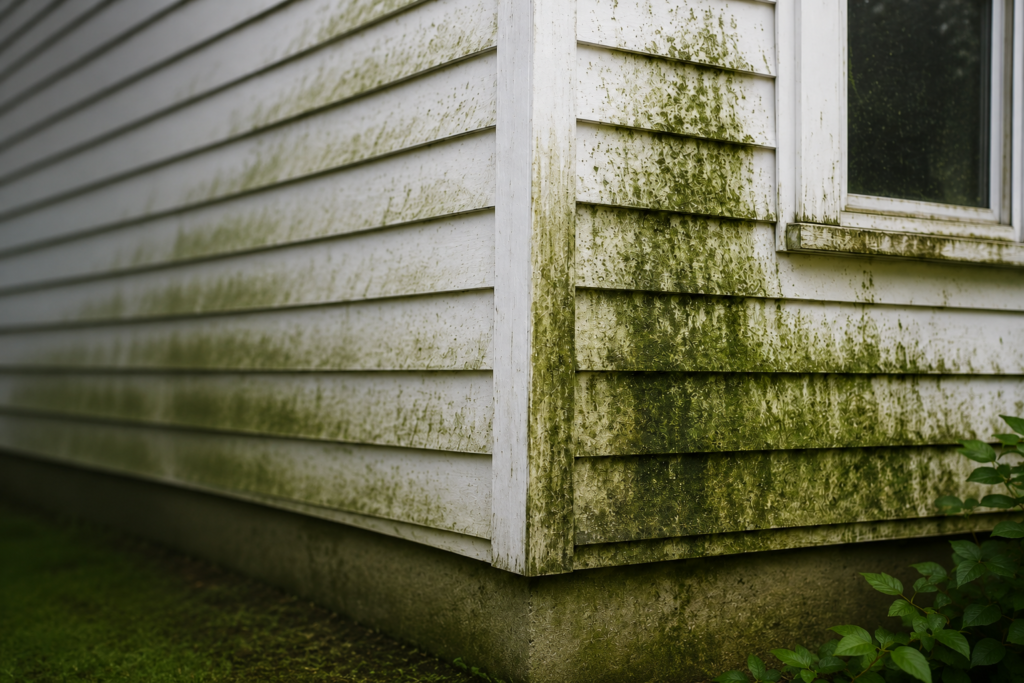
You’ve seen it. That greenish film creeping across the north side of your house. The dark streaks running down your roof shingles. The black patches sitting low on your siding near the ground.
Most homeowners look at it and think: “I’ll clean that up eventually.”
But here’s the truth no one tells you upfront – by the time mold and algae are visible on your home’s exterior, the damage underneath has often already started. What looks like a surface stain is actually a living organism actively feeding on your building materials, trapping moisture, and setting up conditions for rot, structural breakdown, and costly repairs.
This isn’t fear-mongering. These are real, documented outcomes that thousands of homeowners face every year – and almost all of them say the same thing afterward: “I wish I had dealt with it sooner.”
If you’re a homeowner in Fayetteville, NC or anywhere in the surrounding area, the warm and humid climate makes your home especially vulnerable. This guide will walk you through exactly what mold and algae are doing to your property, surface by surface, month by month, and dollar by dollar.
Mold vs. Algae: What’s Actually Growing on Your Home’s Exterior?
Before understanding the damage, it helps to know what you’re dealing with. These two look similar but behave very differently.
What Is Algae? (And Why It Loves Your Roof)
Algae is a photosynthetic organism that travels through the air as microscopic spores. The most common culprit on residential roofs is Gloeocapsa magma, which shows up as black or dark green streaks. It feeds on the limestone filler in asphalt shingles and thrives in humid, shaded conditions.
Algae does not need much to survive. A little moisture and some organic debris is enough. Once it lands on your roof or siding, it spreads quietly across the surface over weeks and months.
What Is Mold? (And Why It’s More Dangerous Than It Looks)
Mold is a fungus. Unlike algae, mold does not need sunlight. It thrives in dark, damp, poorly ventilated environments and feeds directly on organic building materials like wood, insulation, and certain adhesives and paints.
Common exterior mold species include Cladosporium and Aspergillus. Mold appears as fuzzy, slimy, or discolored patches and can establish itself in as little as 48 to 72 hours after moisture exposure.
How to Tell the Difference at a Glance
- Algae: Green or black streaks, often on roofs and siding, follows sun/shade patterns
- Mold: Dark, fuzzy, or slimy patches in consistently damp, shaded spots
- Both: Thrive in humidity, spread if untreated, cause long-term surface damage
If you’ve noticed black streaks on your house and aren’t sure which one you’re dealing with, our blog on what black streaks on your house actually are breaks it down clearly.
The Damage Isn’t the Same Everywhere – Here’s What Each Surface Is Losing
This is where most blogs fall short. They tell you mold and algae are “bad for your home” without explaining what’s actually happening to each specific surface. Here’s the real picture.
Your Roof: Shingle Degradation, Heat Buildup and Premature Aging
Algae feeds on the limestone granules embedded in asphalt shingles. As it spreads, it breaks down the protective coating that keeps moisture out. The dark color of algae also absorbs more heat, raising your attic temperature and increasing your energy bills.
Mold takes it a step further. It penetrates roofing materials and causes rot and structural decay from beneath. What starts as a cosmetic issue can shorten a 25-year roof’s lifespan by 10 years or more.
If you’ve ever wondered whether you should pressure wash your roof, the answer is no – and we explain the safer alternative in detail here: Why You Should Never Pressure Wash Your Roof.
Your Siding: Paint Failure, Wood Rot and Structural Penetration
Mold grows under siding panels where it finds moisture and darkness. It breaks down paint, causes bubbling and peeling, and eventually eats into wood fibers. For vinyl siding, the damage is mostly cosmetic at first — but mold can get behind panels and attack the wood sheathing beneath.
Once mold reaches your wall’s framing, you are no longer looking at a cleaning problem. You are looking at a structural repair.
Your Deck, Driveway and Walkways: Slip Hazards and Porous Destruction
Algae and mold on concrete, decking, and walkways create dangerously slippery surfaces. Beyond the safety risk, both organisms penetrate porous materials and break them down from the inside out. Mold embedded in concrete becomes harder and more expensive to remove over time.
For homeowners who want to protect their outdoor spaces, our guide on pressure washing for patios and decks is a great starting point.
Your Gutters, Soffit and Fascia: The Silent Rot Chain
Clogged gutters hold moisture and become prime breeding grounds for algae and mold. That moisture then spreads to your soffit and fascia — the wooden boards running along your roofline. Once rot sets in here, it can travel into the roof structure itself. This is one of the most common and most overlooked damage pathways on residential homes.
The Damage Clock Is Already Running – Here’s How Fast Things Get Worse
Month 1 to 3: Cosmetic Staining You Think You Can Ignore
In the early stages, mold and algae look like simple discoloration. Faint green patches, light streaking, a bit of grime. It is tempting to put it off. Most homeowners do.
Month 4 to 12: Surface Breakdown Begins
As the organisms establish themselves, paint starts to lift. Shingles begin losing granules. Moisture gets trapped underneath siding. The material below starts softening. What would have been a simple wash job now requires actual surface prep or repair.
Year 1 to 3 and Beyond: Structural Damage, Health Risk and Replacement Costs
This is where the real financial pain hits. Mold has penetrated wall sheathing. Rot has reached framing members. Shingles have degraded to the point of needing full roof replacement. What started as a $300 cleaning has become a $9,000 repair — or more.
What Ignoring Mold and Algae Actually Costs You in Dollars
Let’s put real numbers to this because the gap between prevention and repair is enormous.
Mold Remediation: $1,800 to $9,500 on Average
Professional mold remediation for residential exterior damage runs $1,800 to $9,500 nationally, with severe cases exceeding $30,000. At $10 to $32 per contaminated square foot, even a moderate infestation on your siding adds up fast.
Siding Repair and Replacement: $800 to $25,000
Moderate mold-related siding damage costs $800 to $2,000 to repair. If mold has spread through entire wall sections, full siding replacement runs $10,000 to $25,000. Hidden rot behind panels can push this even higher.
Roof Damage: Up to $13,000 if Algae Goes Unchecked
Full roof replacement, which algae and mold can force years ahead of schedule, costs $5,900 to $13,000 for a standard home. Algae-driven shingle degradation is one of the leading causes of early roof replacement.
The Preventive Alternative: What Soft Washing Actually Costs
A professional soft wash for your home’s exterior – the kind that removes mold and algae at the root – costs a fraction of any of those figures. For most homes, residential exterior cleaning is the single most cost-effective maintenance investment you can make year over year.
Curious about pricing in North Carolina? We break it all down here: How Much Does Pressure Washing Cost in NC.
It’s Not Just Your Home at Risk – It’s Your Family’s Health
How Exterior Mold Spores Find Their Way Inside
Mold spores do not stay outside. They travel through open windows, HVAC systems, and gaps in exterior cladding. Once inside, they colonize damp interior surfaces. Many homeowners treat recurring allergy symptoms, respiratory irritation, and musty odors for months before tracing the source to exterior mold growth.
Who Is Most Vulnerable?
Children, elderly family members, and anyone with asthma, hay fever, or a compromised immune system are most at risk. Mold exposure can trigger or worsen respiratory conditions, cause skin and eye irritation, and in severe cases lead to serious illness.
Symptoms Homeowners Often Misattribute
- Persistent coughing or sneezing indoors
- Worsening allergy symptoms with no clear cause
- Musty smell in rooms adjacent to exterior walls
- Itchy eyes or skin without other explanation
If any of these sound familiar and you have visible exterior mold growth, the two are likely connected.
Why Scrubbing It Yourself Doesn’t Actually Fix the Problem
Surface Clean Does Not Mean Root Removal
Bleach and a brush might clear the visible stain temporarily. But mold and algae root themselves into surfaces at a microscopic level. Without the right cleaning agents and pressure ratios, you are removing the color, not the organism. Regrowth typically appears within a few weeks.
How Wrong Pressure or Products Make the Damage Worse
High-pressure washing on shingles, older siding, or wood can drive water and spores deeper into the material. It can strip paint, damage surfaces, and void manufacturer warranties. The pressure itself is not always the right solution — especially on roofs and delicate cladding.
This is exactly why the method matters as much as the effort.
How Hydro Wash Exteriors LLC Removes Mold and Algae at the Root
The Soft Washing Method: Safe, Deep-Cleaning and Long-Lasting
Soft washing uses low pressure combined with professional-grade, biodegradable cleaning solutions to kill mold and algae organisms at the root – not just at the surface. The result is a deeper clean that lasts significantly longer than a standard pressure wash.
This is the same method recommended by roofing manufacturers for shingle cleaning because it removes biological growth without physical damage.
Eco-Friendly Solutions That Won’t Harm Your Landscaping or Family
The cleaning solutions used by Hydro Wash Exteriors LLC are formulated to be effective on mold, algae, mildew, and lichen while being safe for surrounding plants, pets, and people. No harsh runoff. No toxic residue.
What to Expect During a Professional Exterior Wash
- Pre-rinse of surrounding landscaping for protection
- Application of biodegradable soft wash solution
- Dwell time to break down biological growth at the root
- Low-pressure rinse to clear all residue
- Final inspection to confirm clean, undamaged surfaces
Most residential exteriors are completed in a single visit. Results are immediately visible and last 12 to 24 months depending on your environment.
Hydro Wash Exteriors LLC proudly serves Fayetteville NC, Southern Pines, Pinehurst, Hope Mills, and surrounding communities across North Carolina.
Ready to stop the damage before it gets worse? Call us at +1 (910) 992-7271 or find us on Google Maps to schedule your free estimate.
5 Things You Can Do Right Now to Slow Mold and Algae Growth
These steps will not replace professional cleaning, but they will slow regrowth between service visits.
- Trim overhanging tree branches to increase sunlight exposure on your roof and siding
- Clean your gutters every season to prevent moisture buildup along your roofline
- Improve drainage around your foundation to keep moisture from sitting against your siding
- Check for caulking gaps around windows and doors where moisture can enter
- Schedule annual exterior cleaning before mold and algae reach the damage stage
Staying ahead of the problem is always cheaper than reacting to it. Our blog on preventative exterior cleaning covers this topic in full if you want a deeper look.
Don’t Let a $300 Problem Become a $9,000 Repair
Here is the bottom line. Mold and algae on your home’s exterior are not cosmetic annoyances. They are active threats to your roof, your siding, your structural integrity, your property value, and your family’s health.
The longer you wait, the deeper they go – and the more expensive the fix becomes.
A professional soft wash from Hydro Wash Exteriors LLC removes the growth at the root, protects your surfaces, and extends the life of your exterior materials by years. It is one of the highest-return maintenance decisions a homeowner can make.
Call us today at +1 (910) 992-7271 or visit hydrowashexteriorsllc.com to get your free exterior cleaning estimate. We serve Fayetteville, NC and the surrounding areas — and we are ready to protect your home before the damage goes any further.
Frequently Asked Questions
Is algae on my roof covered by homeowners insurance?
Most homeowners insurance policies do not cover algae or mold removal because it is considered a maintenance issue rather than sudden damage. Prevention through regular professional cleaning is your best financial protection against the repair costs that follow unchecked growth.
Can mold on the outside of my house affect the inside?
Yes. Exterior mold spores migrate indoors through open windows, HVAC systems, and gaps in exterior cladding. Once inside, mold can grow on interior surfaces and trigger respiratory symptoms, allergies, and other health issues — especially for children and elderly residents.
What is soft washing and is it safe for all exterior surfaces?
Soft washing uses low water pressure combined with biodegradable cleaning solutions to safely remove mold, algae, mildew, and lichen from exterior surfaces. It is safe for roof shingles, vinyl siding, wood, brick, concrete, and painted surfaces where high-pressure washing could cause damage.
How long does it take for mold or algae to cause serious damage?
Mold can establish on a surface within 48 to 72 hours of moisture exposure. Visible structural and material damage typically develops within 4 to 12 months of untreated growth. By year two or three, damage often requires professional repair or full surface replacement rather than simple cleaning.
How do I know if I need soft washing or pressure washing?
Soft washing is recommended for roofs, siding, wood surfaces, and any area with active mold or algae growth. Pressure washing is better suited for hard surfaces like driveways and concrete. Not sure which one fits your situation? Read our full comparison here: Pressure Washing vs. Soft Washing in NC.
How often should you have your home’s exterior professionally cleaned?
Most homes in humid climates like North Carolina benefit from professional exterior cleaning once every 12 to 18 months. Homes with heavy tree coverage, north-facing walls, or previous mold issues may need service annually. Read more in our guide on how often to pressure wash your home in NC.